

*Sustainable Mobility Network released its new report on Kolkata’s para-transit electrification at a multi-stakeholder roundtable*
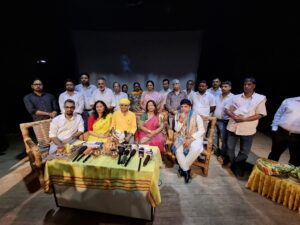
Staff Reporter : Kolkata, 20th September 2026. The Sustainable Mobility Network (SMN) convened a multi-stakeholder roundtable in Kolkata on Saturday to discuss the transition to electric mobility in the city’s para-transit system and released its latest report, “Accelerating the Electric Transition of Kolkata’s Para-Transit System”. The roundtable brought together representatives from government and transport authorities, EV vehicle manufacturers, financial institutions, charging providers, transport operators, researchers, mobility experts, civil society, and the media to discuss practical pathways for accelerating electric mobility in West Bengal.
The report presented at the roundtable examined the progress of electric auto adoption in Kolkata, the economics of switching for drivers, the operational barriers they face, and the policy and institutional measures that could support a more reliable transition. The study drew on field discussions with auto drivers across routes in Kolkata and examined route-level differences in electric vehicle adoption.
The study found that, across seven surveyed routes where both total and electric auto counts were available, 118 of 958 autos were electric, representing 12.3% of the vehicles on those routes. Electric penetration varied considerably between routes, reaching 41.7% on the Taratala–Ramnagar route, 38.1% on Bally Khal–Uttarpara and 25% on Howrah Station–Salkia. The report clarified that the 12.3% figure related specifically to the surveyed routes and was not a citywide estimate.
The findings indicated that the electric transition was already taking place through individual driver decisions, with operating economics emerging as an important factor. Drivers participating in the study reported that a full charge cost approximately ₹50–₹70 compared with ₹300–₹400 for an LPG refill. The study’s payback model estimated that, under its stated assumptions, the net cost of an electric auto could be recovered in about one year and four months in the historical incentive scenario.
At the same time, the report highlighted several barriers that were affecting adoption. These included differences between advertised and real-world vehicle range, uncertainty over battery replacement costs, limited access to service centres on some routes, the need for charging on routes where daily duty cycles exceeded practical vehicle range, and uncertainty around financing and the future resale value of electric autos.
The report also examined the policy landscape and found that while a policy framework for electric mobility existed, several measures relevant to electric three-wheelers remained to be addressed. It also highlighted the need for greater coordination among transport, urban development, power and other relevant institutions.

Shri Umesh Rai, Department of Urban Development & Municipal Affairs (UDMA), Government of West Bengal, said:
“The transition to electric mobility requires coordination across departments, infrastructure providers, vehicle manufacturers, financial institutions and transport operators. The discussions at this roundtable highlighted the importance of addressing practical issues such as charging, urban space, operations and institutional coordination as part of a wider transition towards electric mobility.”
Shri Debashis Sen, ex-IAS, Former Additional Chief Secretary, Government of West Bengal, said:
“The experience of Kolkata’s transport system showed that technology adoption needed to be supported by an ecosystem of policy, infrastructure, finance and implementation. The roundtable provided an important platform for government, industry and transport stakeholders to discuss practical measures that responded to the realities of operators and drivers.”
The roundtable discussion was organised around four key areas: financing and financial models, charging infrastructure, institutional coordination and policy, and operational and practical implementation. Participants discussed the need for financing products that reflected the earning patterns of para-transit drivers, route-specific approaches to charging infrastructure, clearer institutional responsibilities and greater certainty around vehicle performance, servicing and long-term ownership costs.
The discussion also considered the importance of ensuring that the electric transition remained grounded in the realities of para-transit operations. Since auto-rickshaws represent household-level vehicle and livelihood decisions, participants discussed the need for transparent information on vehicle range and battery replacement, accessible after-sales service, appropriate financing, and charging infrastructure at locations where route conditions require it.
The report’s recommendations included greater transparency from manufacturers and dealers on real-world range and battery replacement costs; financing products that better reflected the economics and earning patterns of drivers; charging provision at stands where route duty cycles required mid-day charging; and stronger coordination among relevant government departments, local authorities, utilities, financial institutions, manufacturers and driver associations.
The roundtable concluded with a focus on translating the evidence and stakeholder perspectives into practical next steps for Kolkata and West Bengal. The findings from the report and the discussions at the event provided inputs for continued stakeholder engagement on a more informed, coordinated and sustainable transition to electric para-transit.
About the Report
“Accelerating the Electric Transition of Kolkata’s Para-Transit System” presents field evidence on the emerging adoption of electric autos in Kolkata, examines the economics and operational realities of the transition, reviews the relevant policy landscape, and sets out stakeholder-specific recommendations for accelerating adoption.
About Sustainable Mobility Network
Sustainable Mobility Network (SMN) works to support dialogue, research and stakeholder engagement on sustainable and inclusive mobility, with a focus on practical pathways for improving public and intermediate public transport.








Be First to Comment