
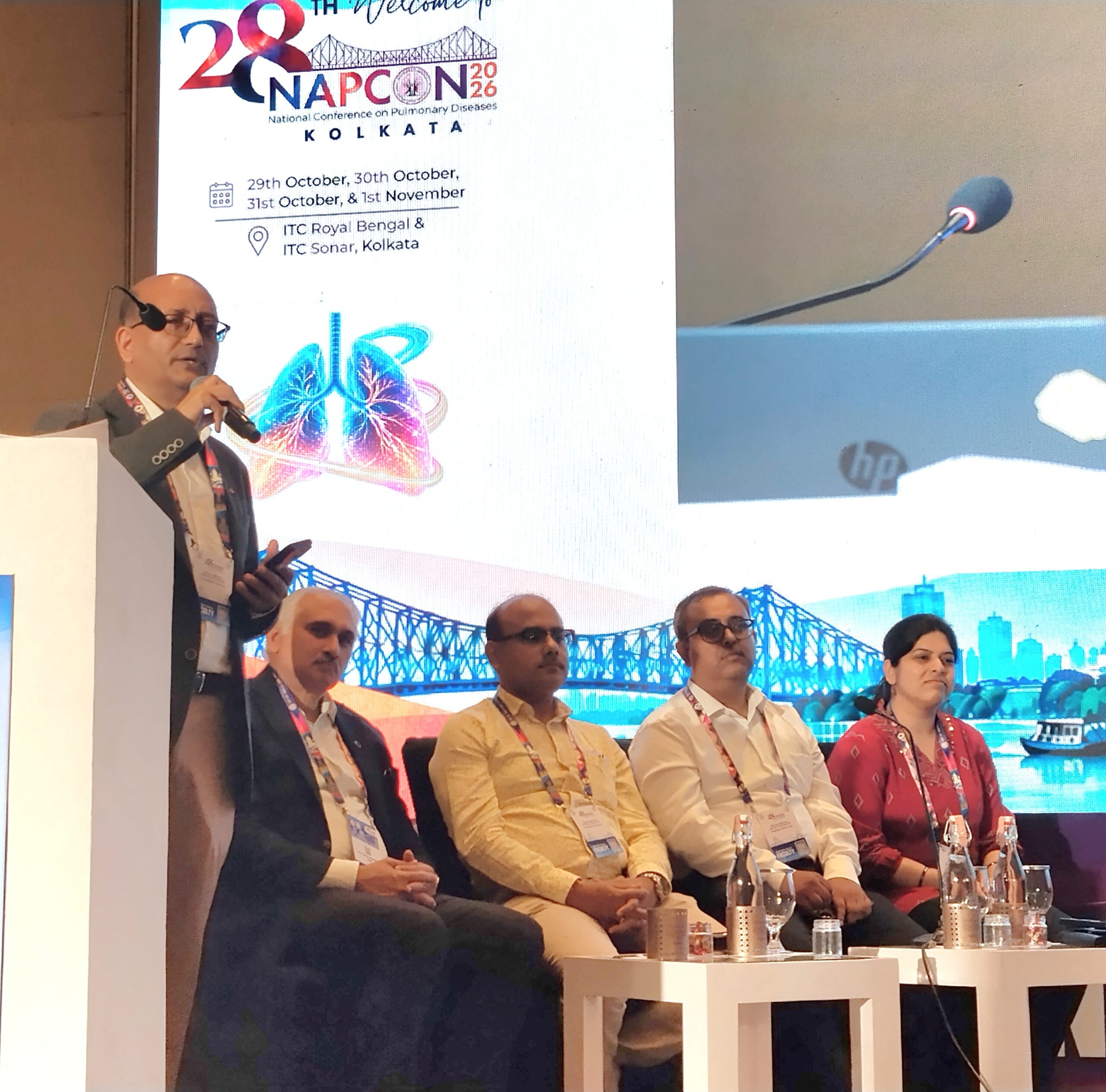
L to R: Dr. Hindol Dasgupta
Dr. Parameshwar Nair
Dr. Samadarshi Dutta
Dr. Ritam Chakraborty
Dr. Alisha Chaudhari
Staff Reporter : KOLKATA, OCTOBER 30, 2026 — Leading respiratory specialists and clinical experts convened for an in-depth scientific session titled “Remission in asthma: is it real?” to address shifting paradigms in severe asthma care and management. The proceedings evaluated complete clinical remission as an achievable goal in modern medical practice, emphasizing how targeted therapies are expanding treatment objectives beyond basic symptom relief toward sustained disease modification. Panelists underscored that asthma control must be evaluated across two distinct domains—symptomatic control (daytime symptoms, activity limitations, and nighttime awakenings) and future risk reduction.
The scientific sessions highlighted structured clinical protocols for managing remission and guided treatment de-escalation. Experts noted that while escalation pathways (incorporating combinations, biologics, and bronchial thermoplasty) are well-established, stepping down therapy requires a scientific, step-by-step approach. De-escalation aims to reduce long-term steroid and economic burdens without compromising patient safety. Medical experts emphasized that de-escalation must be deliberate, sequential, and never abrupt:
Sequential Step-Down Sequence: Oral corticosteroids (OCS) should be tapered first, followed by high-dose inhaled corticosteroids (ICS) and add-on therapies, before attempting to stretch or adjust biologic intervals.
Preservation of Anti-Inflammatory Coverage: Complete withdrawal of inhaled corticosteroids is discouraged; maintaining low-dose ICS coverage remains essential to prevent sudden exacerbations, even after remission is achieved.
Early Intervention vs. Late-Stage Use: Integrating biologic therapies earlier in moderate-to-severe disease stages—rather than reserving them solely as a final resort—can modify airway inflammation early and prevent progression to severe structural damage.
Biologic Interval Stretching: For patients achieving stable 12-month clinical remission with normalized blood eosinophils and FeNO levels, controlled dosing adjustments or interval stretching (rather than sudden cessation) offer a safe path toward long-term maintenance.
The session further evaluated diagnostic tools and clinical management challenges, examining screening instruments such as the Asthma Control Test (ACT), Asthma Control Questionnaire (ACQ), and AIRQ. Experts observed that true severe asthma accounts for approximately 5% of cases once secondary conditions and “masqueraders” are ruled out, reinforcing the need for serial spirometry and objective airway biomarker assessments over subjective symptom reports alone.
Addressing the necessity of evaluating airway-specific inflammation to guide therapeutic decisions and prevent over-treatment, panelist Dr. Parameshwar Nair stated, “Respiratory physicians are probably the only subspecialists who treat an organ without looking at the secretions of the organ that they are treating… We really have to assess what is in the airway, not just to evaluate inflammatory profiles, but also to prevent the unnecessary or inappropriate use of biologics.”
The forum concluded by reinforcing that achieving clinical remission—characterized by absent symptoms, normalized lung function, zero exacerbations, and elimination of systemic steroids—requires a dual approach: early therapeutic intervention to modify disease progression, coupled with objective, long-term monitoring to guide safe treatment de-escalation.










Be First to Comment